Music and audio in Among the Trolls
The soundtrack avoids traditional Nordic instrumentation on purpose: acoustic piano, cello and voices are repitched and distorted until the source stops being recognisable.
Among the Trolls treats sound as part of its survival design. Birds tell you the weather, the forest goes quiet when the world corrupts, and the score is built to make the player feel the same disorientation Anna does. Devlog #13 interviews the two people responsible: composer Daniele Carmosino and lead sound designer Marcello Radice.
A score with no traditional instruments, on purpose
The game lives between two realities — Anna's contemporary world and the ancient world of Nordic myth — and Carmosino says the music does not illustrate them from the outside. It focuses on Anna's inner vision: what she feels through family tragedy, loneliness, and her bond with nature. The duality is embodied in timbre rather than in theme.
Practically, the palette starts with concrete acoustic instruments: piano, cello, voices, the tangible contemporary world. Through electronic manipulation — extreme repitching, distortion, layering — those sources become almost unrecognisable while staying organic. What reaches the player is often a sound they can no longer place, mirroring Anna recognising her grandparents' island but not what she finds on it.
There is one deliberate refusal worth knowing: no ethnic or traditional instrumentation. No kantele, no runolaulu, no philological quotations from Karelian chant. It was a decision made with creative director Giorgio Macellari from the start, in favour of a modern, cinematic sound.
The forest is a character
Radice's goal was a living soundscape that constantly adapts to what is happening around Anna:
- each biome is defined by the calls of different animal species
- birdsong changes from day to night
- how present the birds are depends on weather — noisier in sun, quieter in strong wind or rain
- the forest is not inherently threatening; it is present and alive
That changes once a rift opens. As the world grows corrupted, the soundscape gets quieter and quieter, animal calls take on unsettling, menacing tones, and the player is told to restore nature's balance and save it from Hisii's corruption.
Voices for things that are not real
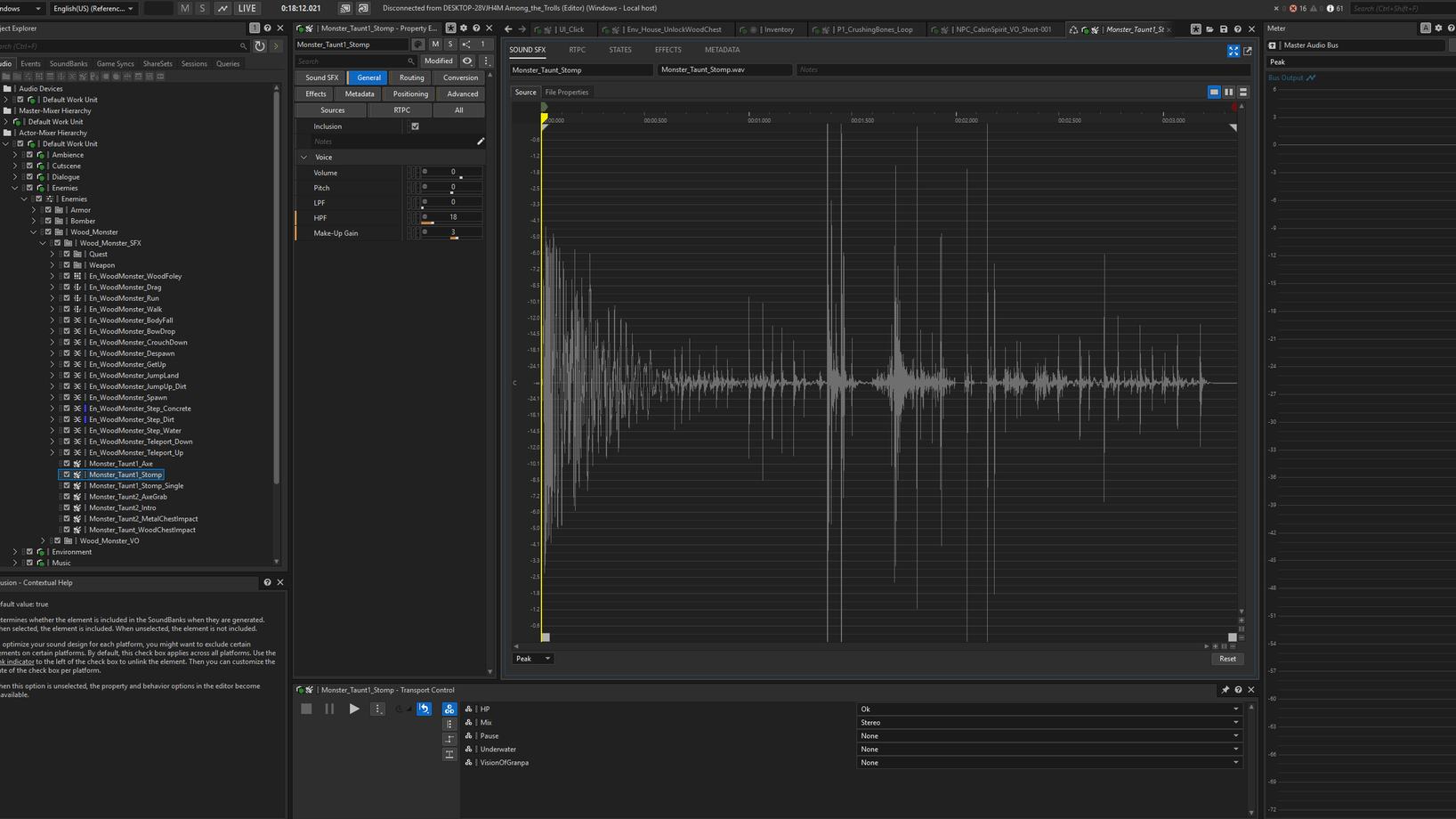
The hardest and most enjoyable problem was designing monster voices: harrowing screams for zombie-like creatures that still let their wooden nature come through. The method: record vocalisations from death metal singer and musician Gabriele Gramaglia, then layer recordings of wood objects and surfaces being manipulated on top, adding the texture and resonance of the material. Everything was processed further from there.
Silence as a tool
The game alternates between total quiet and pure danger, and Radice is explicit that taking sound away can be scarier than adding it. The practical effect for players: when the forest goes still, something has changed — either the weather, or the balance.
Sources
- Devlog #13 "Between Two Worlds / The Forest Is Watching": Steam news archive
- Devlog #12 (Dev Pills behind-the-scenes series on YouTube): Steam news archive
- Official site devlog listing: amongthetrolls.com
Game imagery on this page is official promotional material, used for reference.